
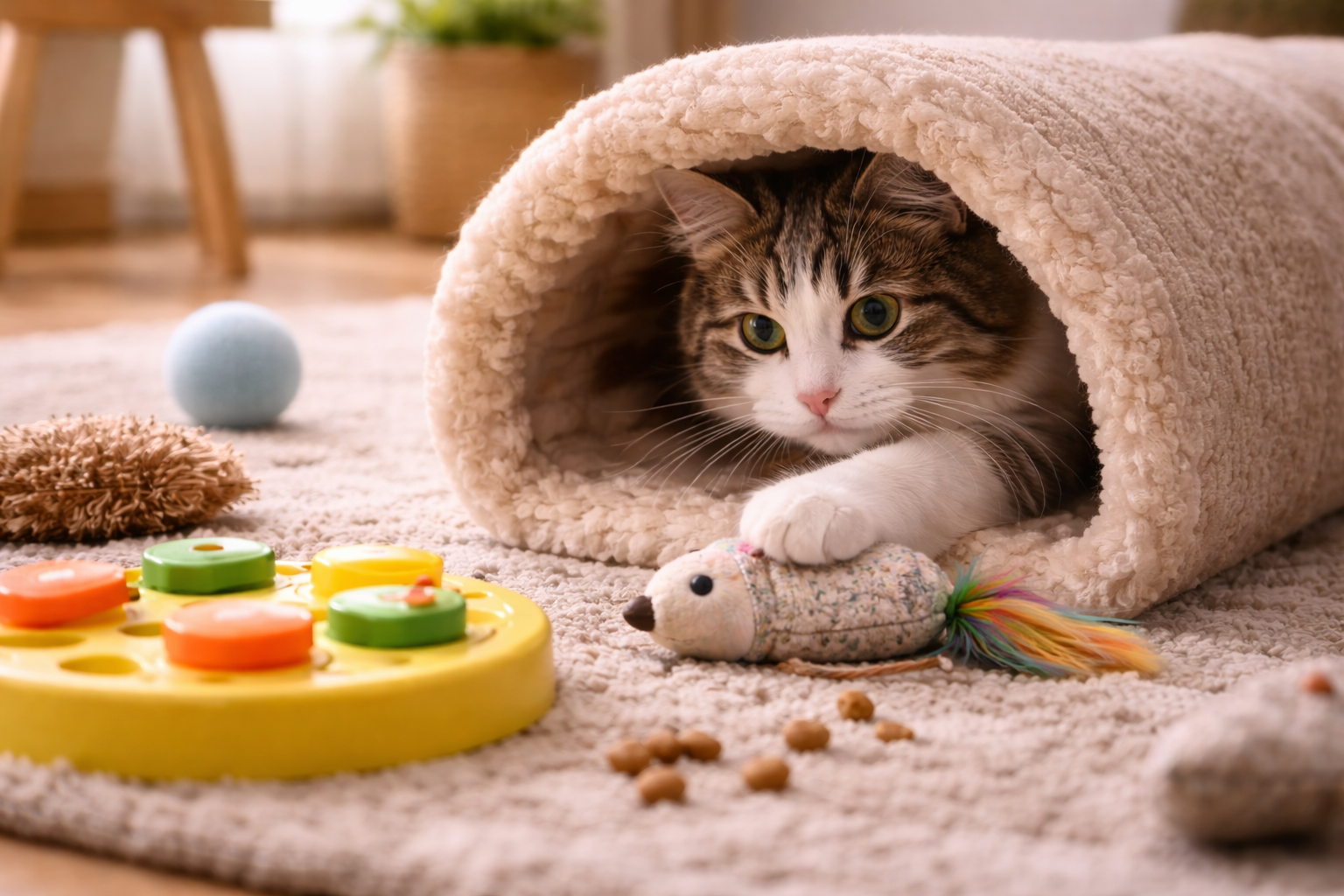
Not every cat runs toward a new toy the moment it touches the floor. Some pause, watch from a distance, and prefer to stay in a familiar corner until they feel safe. For owners of timid pets, finding the right kind of enrichment can take more patience and more observation than it does with naturally bold cats. This is where cat toys for shy cats become especially important, because the right play tools can encourage quiet confidence, support emotional comfort, and help nervous cats interact with their environment at their own pace.
Shy cats often experience the world differently from more outgoing pets. Sudden sounds, unfamiliar objects, fast movements, or crowded spaces may feel overwhelming rather than exciting. That does not mean these cats do not want stimulation. In most cases, they still enjoy hunting, batting, sniffing, and exploring, but they need gentler invitations. The best cat toys for shy cats are usually designed or selected with softness, predictability, and low pressure in mind. Instead of pushing a nervous cat into intense play, these toys create opportunities for safe curiosity.
One of the main goals of choosing cat toys for shy cats is building trust. A fearful or reserved cat is more likely to engage when the toy does not seem threatening. Soft plush toys, quiet mice, light teaser wands, and simple track toys often work better than loud, flashy, or highly unpredictable products. When a cat can observe a toy, approach it slowly, and interact without feeling startled, play becomes a positive experience. Over time, those small moments of success can help increase confidence.
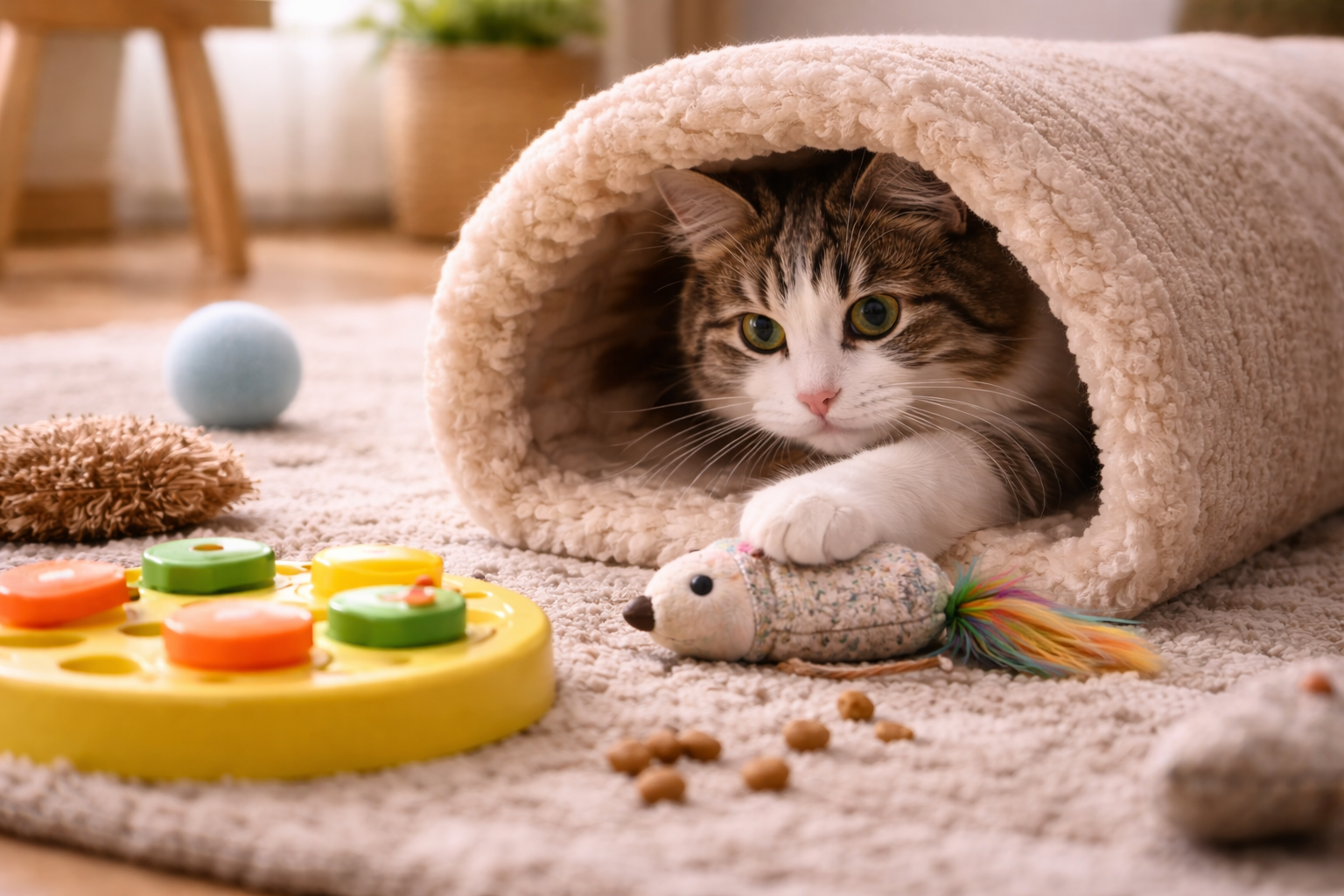 For many timid pets, hiding and observing are part of the play process. That is why tunnels, fabric cubes, and toys that can be reached from behind cover are often excellent cat toys for shy cats. These options allow a cat to feel protected while still joining in. A cat may sit half-hidden inside a tunnel and bat at a feather passing by, or stay behind furniture while watching a soft toy move slowly across the floor. This style of play respects the cat’s need for security while still encouraging activity and engagement.
Interactive play can be especially valuable when handled gently. Owners sometimes assume shy cats do not like games, but many simply need a calmer approach. Slow wand movements, quiet dragging motions, and pauses that allow the cat to watch and decide can make a huge difference. In this way, cat toys for shy cats are not just about the object itself. They are also about how the toy is introduced. A soft teaser moved behind a cushion or near a hiding place may feel much safer than a toy waved quickly in open space.
Quiet toys are often the best starting point. While some energetic cats enjoy bells, rattles, or crinkly sounds, shy cats may prefer silent or low-noise options. The most effective cat toys for shy cats are often plush mice, soft pom-poms, felt toys, and gentle feather attachments without loud sound effects. These toys reduce sensory pressure and help prevent the cat from becoming startled. Once confidence grows, some cats may accept more variety, but quiet play is often the best beginning.
Scent can also play an important role. Catnip, silvervine, and valerian-filled toys are sometimes among the best cat toys for shy cats because they create interest without demanding intense movement. A nervous cat may ignore a fast-moving toy but become curious about a soft toy with an appealing scent. Sniffing, rubbing, pawing, and light kicking are all useful forms of enrichment. These quieter interactions still support emotional wellbeing and help a shy cat feel more comfortable exploring something new.
Another helpful category includes puzzle feeders and treat-dispensing toys. Food can be a powerful confidence-builder, especially for cats that are cautious but curious. The right cat toys for shy cats often combine reward with gentle effort. A simple treat puzzle allows the cat to investigate, touch, and solve without the pressure of loud motion or direct human involvement. This can be especially effective for cats that do not yet feel comfortable with hands-on interactive play. It lets them build confidence independently and at their own speed.
Routine matters a great deal for timid cats. Even the best cat toys for shy cats may be ignored if introduced at the wrong time or in a stressful environment. Calm moments, quiet rooms, and familiar spaces are usually the best settings for play. A shy cat may be more open to engagement after resting, before a meal, or during the quieter parts of the evening. Repeating play at similar times each day can help the cat feel secure. Predictability turns toys into part of a trusted routine rather than a surprise.
Toy placement also matters more than many owners realize. A nervous cat may not cross a large open room to investigate a toy, even if the toy is interesting. The best approach is often to place cat toys for shy cats near favorite resting spots, beds, hideouts, or cat trees. When the toy appears in a location the cat already trusts, interaction feels easier. A plush mouse near a blanket, a tunnel near a corner perch, or a puzzle feeder beside a quiet hiding area can all invite gentle exploration.
It is important to avoid overwhelming the cat with too many choices at once. Some owners bring home a large collection of products, hoping one will work, but shy cats often respond better to a small and carefully chosen selection. The best cat toys for shy cats are usually introduced slowly. One toy at a time allows the cat to study it, smell it, and decide how to respond. Too many new objects at once can create stress instead of enrichment.
Toy rotation is still useful, but it should be done thoughtfully. Once a nervous cat has accepted a toy, it can become part of that cat’s comfort zone. Rotating cat toys for shy cats works best when changes are gradual rather than sudden. Bringing back a familiar plush toy after a short break may renew interest without causing uncertainty. The goal is to preserve novelty while keeping enough familiarity that the cat still feels safe.
Age and life stage can also affect what works best. Kittens may be shy but still curious, often responding well to small, soft, lightweight toys they can control. Adult cats may need more time to trust new objects, especially if they have had limited socialization or stressful past experiences. Senior cats often benefit from especially gentle cat toys for shy cats, such as soft scented toys, easy puzzles, or slow interactive games. Matching the toy to both the cat’s personality and physical ability leads to better results.
The environment around the toy makes a real difference too. Cat toys for shy cats are most effective when combined with a calm indoor setup that includes hiding spots, vertical spaces, soft bedding, and quiet observation areas. A confident environment supports confident play. When a cat knows it can retreat, climb, or rest nearby, it is more likely to take small playful risks. Toys work best as part of an emotional support system, not just as random objects placed in the room.
Owners should also remember that progress may be subtle. A bold cat may leap, chase, and pounce dramatically, but a shy cat may show success in quieter ways. Sniffing a new toy, touching it with one paw, peeking from a tunnel, or batting gently from a hiding place are all meaningful signs. The best cat toys for shy cats do not force big reactions. They create safe chances for small steps, and those steps often lead to bigger confidence over time.
In the end, helping a timid cat enjoy play is less about excitement and more about comfort, patience, and trust. The right cat toys for shy cats can support emotional security while gently encouraging natural instincts like hunting, exploring, and problem-solving. With a calm approach and carefully chosen toys, even a reserved indoor cat can become more curious, more relaxed, and more willing to engage with the world around it. For owners of shy pets, that quiet growth is one of the most rewarding parts of enrichment.
Tel: Phone / WhatsApp: +86 13718368168
Email: Email: info@fukapets.com

 KR
KR JP
JP EN
EN