
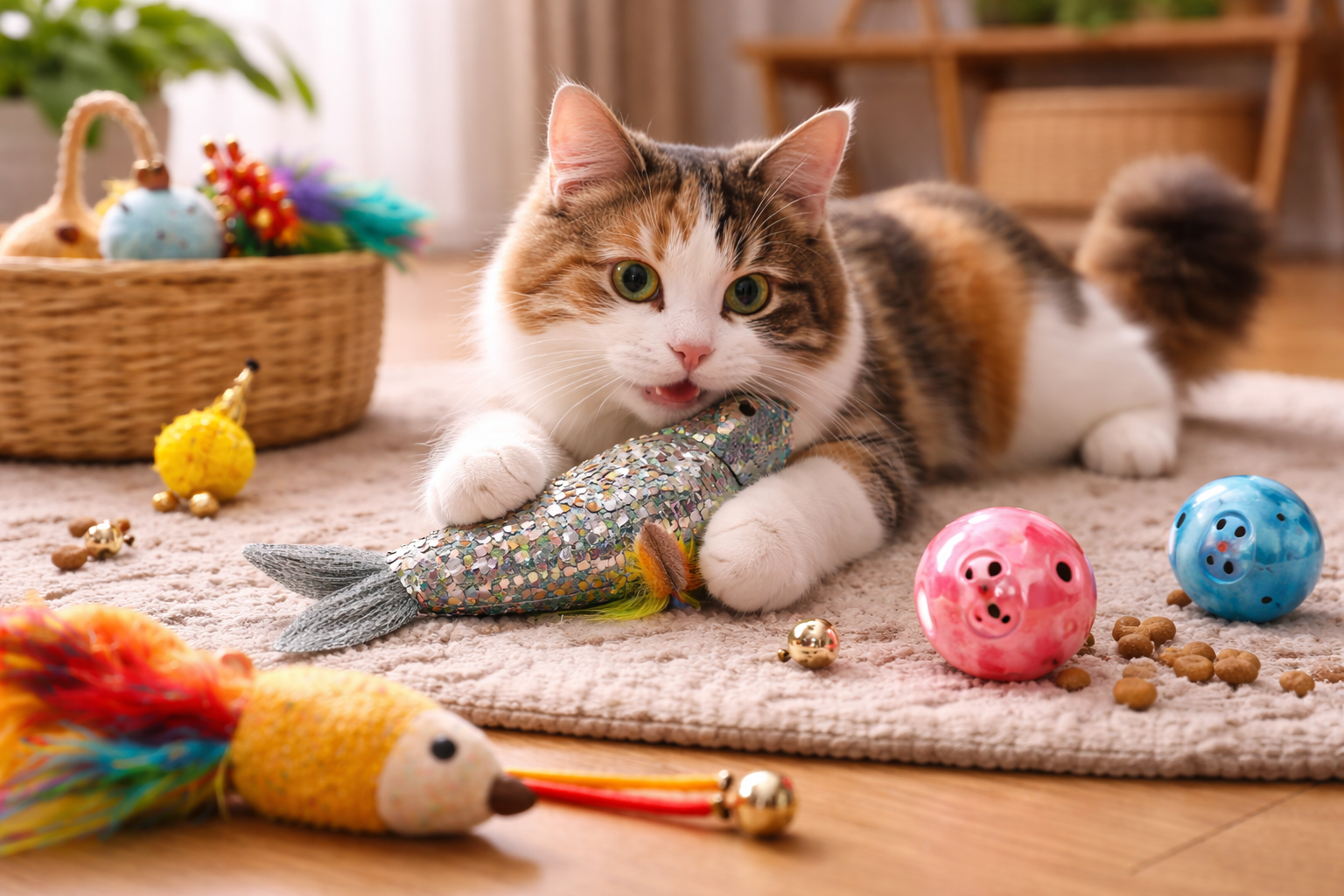
A silent toy may interest one cat for a few minutes, while another ignores it completely and walks away. Cats have different play preferences, and for many energetic or highly curious pets, sound can make a toy far more exciting. Bells, crinkles, rattles, jingles, and light popping noises often add another layer of stimulation that encourages a cat to chase, swat, bite, and investigate. That is why many owners begin exploring noisy cat toys when they want to bring more excitement, movement, and variety into their cat’s routine.
Cats are naturally alert to small sounds in their environment. In the wild, faint rustling or quick movements can signal prey nearby. Even indoor cats still carry that instinct, which means sound can make play feel more realistic and rewarding. The best noisy cat toys tap into this instinct by adding audio cues that trigger curiosity. A crinkly tunnel, a jingle ball, or a plush toy with a rattle inside can hold a cat’s attention longer than a completely silent object because it creates feedback every time the cat touches it.
One reason owners choose noisy cat toys is to increase engagement for cats that seem bored with regular toys. Some cats lose interest quickly if nothing changes in the play experience. A toy that moves and makes sound offers a stronger response. When the cat swats it, hears a jingle, and sees it roll away, the toy becomes more interactive. This can help encourage repeat play, especially for cats that need a little extra motivation to stay active indoors.
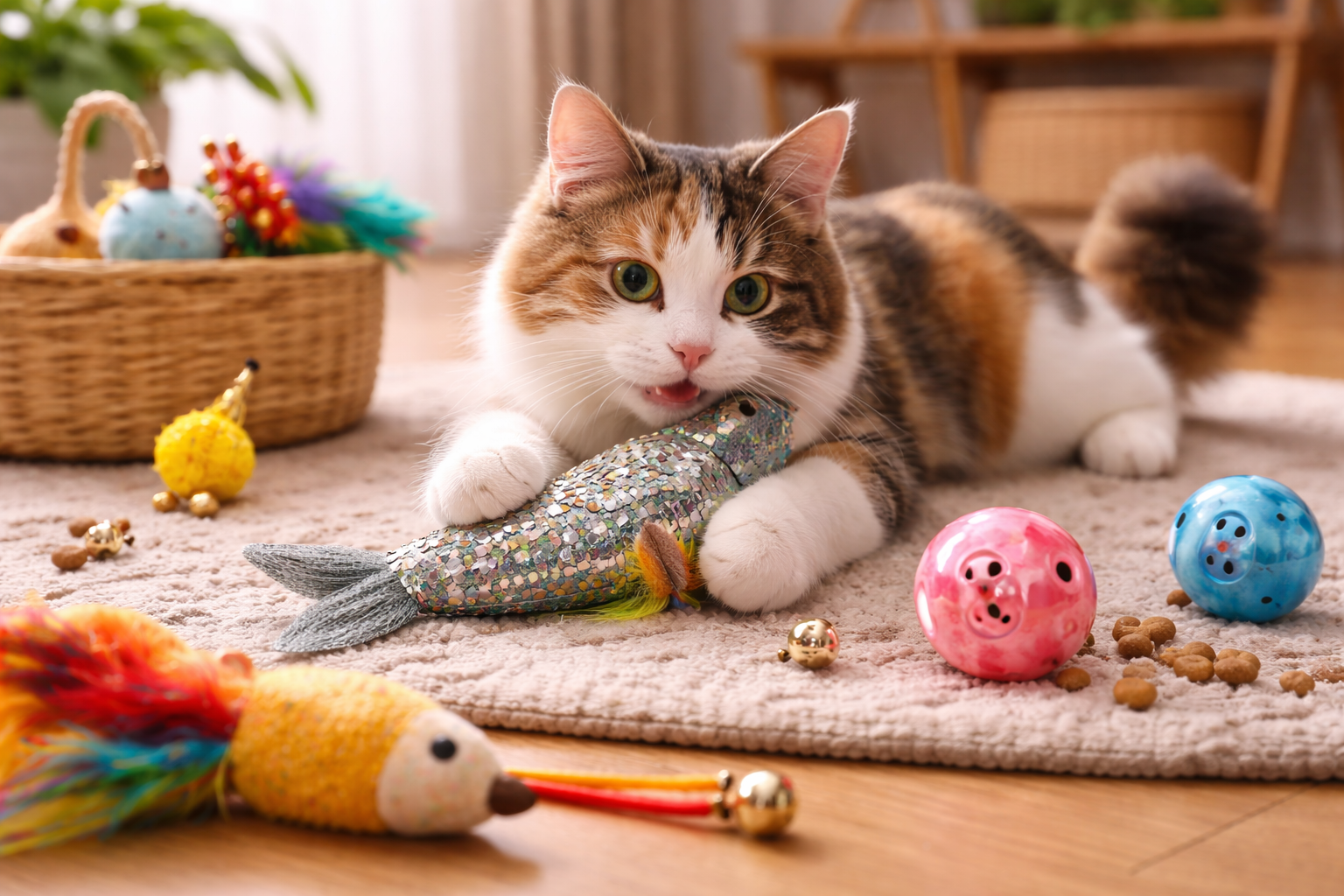 Exercise is one of the biggest benefits of using noisy cat toys. Indoor cats often need help staying physically engaged, particularly if they spend much of the day resting. Sound-based toys can encourage more chasing, pouncing, batting, and jumping because they give cats an immediate reason to continue the game. A bell ball rolling across the floor or a crinkle toy skidding under a chair can trigger the kind of rapid, playful response that supports coordination, balance, and muscle tone. In this way, noisy cat toys can contribute to both fun and fitness.
Mental stimulation matters just as much as physical movement. Cats do not simply react to what they see. They also respond to texture, movement, and sound. This is why noisy cat toys often work well as enrichment tools. They provide more sensory input than a plain toy and can turn simple play into a more immersive experience. For curious cats, the sound becomes part of the puzzle. They want to know what caused it, where it went, and how to make it happen again. That repeated investigation helps keep the mind engaged.
Different kinds of noisy cat toys suit different personalities. Some cats love crinkly materials because the sound mimics dry leaves or light rustling. Others prefer jingle balls that move quickly and make a clear metallic sound. Plush mice with rattles inside are popular for cats that enjoy carrying toys in their mouths or batting them across the floor. Spring toys with bells can appeal to cats that like unpredictable motion. There is no single best option for every cat, which is why observing individual behavior is so important when choosing toys.
Another advantage of noisy cat toys is that they can help redirect unwanted behavior. Cats that feel understimulated may scratch furniture, attack random objects, or wake their owners by creating their own entertainment. When a cat has access to toys that are genuinely engaging, it may be less likely to seek stimulation in destructive ways. A well-timed session with noisy cat toys in the evening or before meals can help release pent-up energy and create a more satisfying routine.
However, not every situation calls for sound-based toys. Some households prefer quieter play, especially at night, and some cats become overstimulated by too much sensory input. That is why balance matters. The best toy collection often includes both silent and noisy cat toys, allowing owners to adjust based on time of day, the cat’s energy level, and the household environment. A cat may enjoy a loud jingle toy during active daytime hours but prefer a softer plush toy later in the evening.
Interactive play can make noisy cat toys even more effective. A simple bell toy tied to a wand or a crinkly teaser moved across the floor can feel much more exciting when the owner controls the pace and direction. This type of shared play allows owners to mimic prey behavior, making the toy seem alive. Short daily sessions with noisy cat toys can strengthen the bond between cat and owner while also supporting exercise and emotional satisfaction. Cats often enjoy these sessions more than passive solo play because the movement feels less predictable.
For cats that stay alone during the day, independent noisy cat toys can provide valuable stimulation. Jingle balls, rattle mice, and crinkle tunnels are often suitable for self-directed play when chosen carefully. They can help reduce boredom and encourage activity when no one is available to interact. Even so, owners should rotate toys regularly. If the same sound and object remain in the same place every day, novelty can fade. Rotating noisy cat toys every few days helps keep them interesting and makes old favorites feel new again.
Safety should always be part of the decision. Good noisy cat toys should be made from durable materials and designed so that bells, rattles, or inserts cannot easily break loose. Small parts can become hazards if a cat chews aggressively or tears toys apart. It is wise to inspect toys often, especially plush ones that get bitten and kicked. Supervision may also be helpful when introducing a new toy, especially if the cat tends to play roughly. A toy should be entertaining, but it should also remain safe through repeated use.
Age and activity level can influence which noisy cat toys work best. Kittens often love quick sounds and unpredictable motion, making them enthusiastic fans of bells and rattles. Adult cats may enjoy a wider variety, including toys that combine sound with food rewards or interactive elements. Senior cats can also enjoy noisy cat toys, but gentler sound and slower movement are often more comfortable for them. Matching the toy to the cat’s stage of life makes play more enjoyable and sustainable.
The home environment also affects toy success. Noisy cat toys work well when they are part of a richer indoor setup that includes tunnels, scratching posts, cat trees, and observation spots. A jingle toy that rolls from one room to another becomes even more interesting when the cat can chase it through a tunnel or pounce from behind a perch. Toys do more when they exist inside a playful environment rather than sitting alone on the floor.
It is important to remember that more noise does not always mean more value. The most effective noisy cat toys are not necessarily the loudest ones. Instead, they are the toys that create just enough sound to trigger interest without causing stress for the cat or the people living nearby. Subtle crinkles, light jingles, and gentle rattles are often the most successful because they feel stimulating without becoming overwhelming.
In the end, noisy cat toys can be an excellent choice for cats that crave sensory-rich play. They support exercise, curiosity, and mental engagement while offering a more dynamic play experience than many silent alternatives. Whether the goal is to reduce boredom, increase activity, or simply discover what makes a cat happiest, sound-based toys can become a valuable part of daily enrichment. For many playful cats, the right little jingle or crinkle is enough to turn an ordinary toy into something impossible to resist.
Tel: Phone / WhatsApp: +86 13718368168
Email: Email: info@fukapets.com

 KR
KR JP
JP EN
EN