
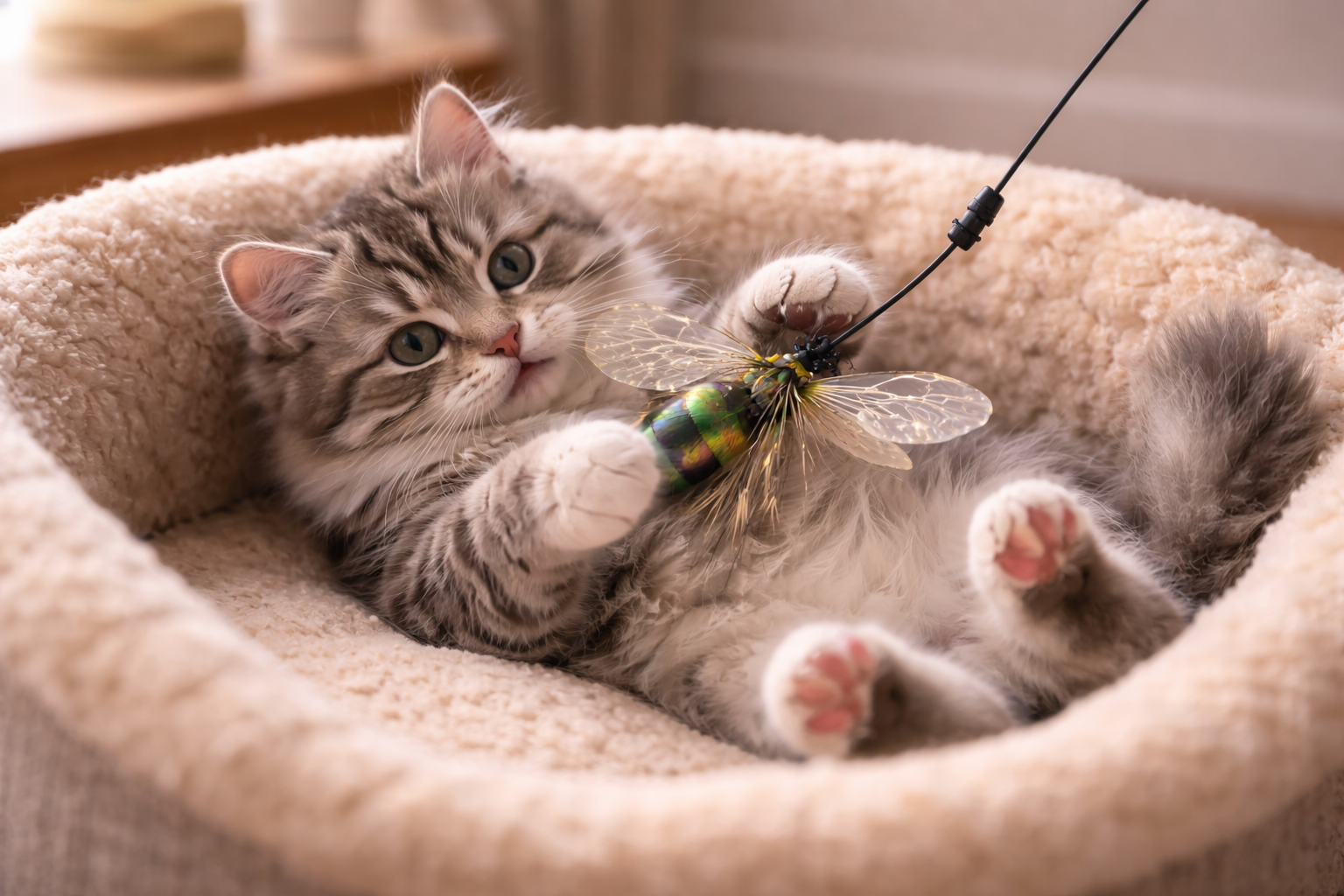
Cats experience their environment through motion, contrast, and instinct rather than novelty alone. While many toys promise excitement, few manage to keep a cat engaged beyond the first few play sessions. This is where realistic design becomes essential, and the value of a Realistic Insect Cat Toy Attachment becomes clear. By focusing on movement patterns that resemble live prey, this type of attachment transforms ordinary play into a deeply instinctive experience.
Unlike static toys or overly decorative designs, insect-inspired attachments succeed because they align with how cats naturally hunt. Subtle fluttering, sudden directional changes, and lightweight resistance all contribute to an illusion of life. When attached to a flexible wand, a Realistic Insect Cat Toy Attachment reacts dynamically to hand movement, allowing cats to track, stalk, and pounce as they would in a natural hunting scenario.
One of the most noticeable differences owners observe is how quickly cats lock onto insect-style attachments. Even cats that typically ignore toys often respond immediately to lifelike insect shapes. Transparent wings, elongated bodies, and natural color tones trigger visual recognition, while unpredictable motion sustains interest. This combination encourages longer play sessions and reduces the likelihood of cats abandoning toys after brief exposure.
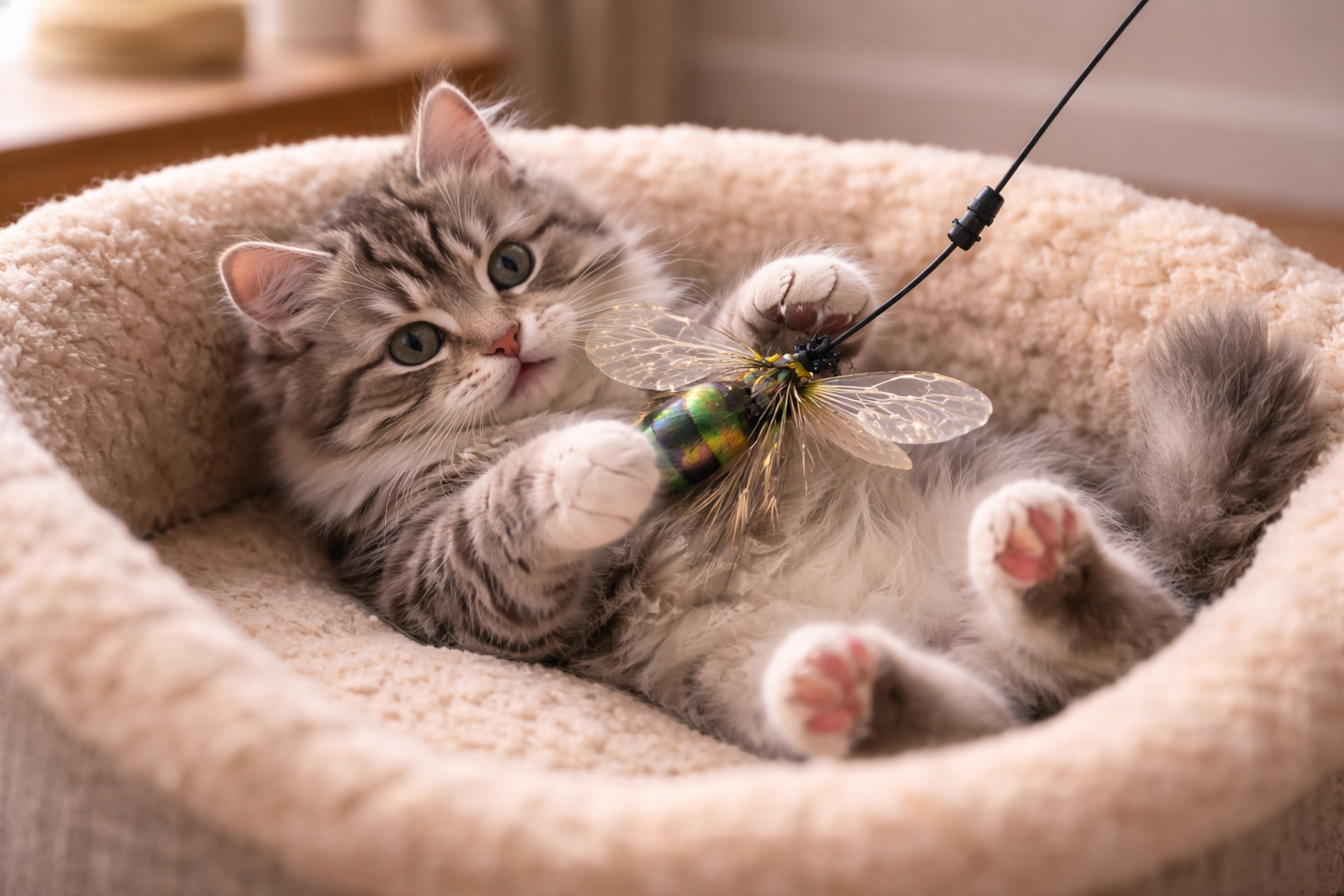 Interactive play with a Realistic Insect Cat Toy Attachment supports physical health in a way passive toys cannot. Cats must engage their entire bodies to follow fast, irregular movement. Short sprints, jumps, and mid-air swipes strengthen muscles, improve balance, and support joint flexibility. For indoor cats, this form of exercise is especially valuable, helping offset the limitations of a controlled environment.
Mental stimulation plays an equally important role. Cats thrive when play requires observation and decision-making rather than simple reaction. Because insect attachments behave differently with each movement, cats cannot predict outcomes. They must adjust timing, angle, and force with every attempt. This mental engagement helps reduce boredom-related behaviors such as excessive scratching, over-grooming, or disinterest in play.
Another advantage lies in how these attachments fit into refill-based toy systems. Instead of replacing an entire wand, owners can swap out different insect designs to refresh play. Rotating between moth-like gliders, fast horsefly styles, or compact beetle shapes keeps stimulation high while minimizing clutter. A Realistic Insect Cat Toy Attachment becomes part of a flexible system rather than a disposable item.
Durability is a critical consideration for realistic designs. High-quality attachments balance lightweight construction with reinforced connection points, allowing them to withstand repeated strikes and biting. When materials are chosen carefully, wings flutter naturally without tearing, and bodies retain shape without becoming stiff. A well-made Realistic Insect Cat Toy Attachment maintains realism over time, even with frequent use.
Safety is also enhanced through supervised interactive play. Wand-based attachments reduce the risk of unsupervised chewing or ingestion while encouraging owner involvement. This shared activity strengthens the bond between cat and owner, turning play into a routine rather than a background distraction. Many owners report calmer behavior and improved rest patterns after regular interactive sessions.
As consumer awareness of feline enrichment grows, expectations for cat toys are changing. Pet owners are moving away from novelty-driven products toward designs that support long-term engagement and natural behavior. The Realistic Insect Cat Toy Attachment reflects this shift by prioritizing instinct, motion, and adaptability over flashy aesthetics.
In modern households where cats spend most of their lives indoors, meaningful play is not optional—it is essential. Toys that recreate the look and movement of real insects offer stimulation that feels authentic rather than artificial. By integrating these attachments into daily routines, owners provide enrichment that satisfies both physical and mental needs, leading to healthier and more content companions.
Tel: Phone / WhatsApp: +86 13718368168
Email: Email: info@fukapets.com

 KR
KR JP
JP EN
EN