

As indoor cat ownership continues to grow worldwide, pet owners are becoming increasingly aware of the importance of mental and physical stimulation. Unlike outdoor cats, indoor cats depend entirely on their environment—and the tools provided within it—to explore, hunt, exercise, and express their natural instincts. This shift has made self play toys for cats one of the most valuable and fast-growing categories in the pet industry. These toys are not just accessories; they are essential enrichment tools that help cats live happier, healthier, and more confident lives even when left alone for long periods.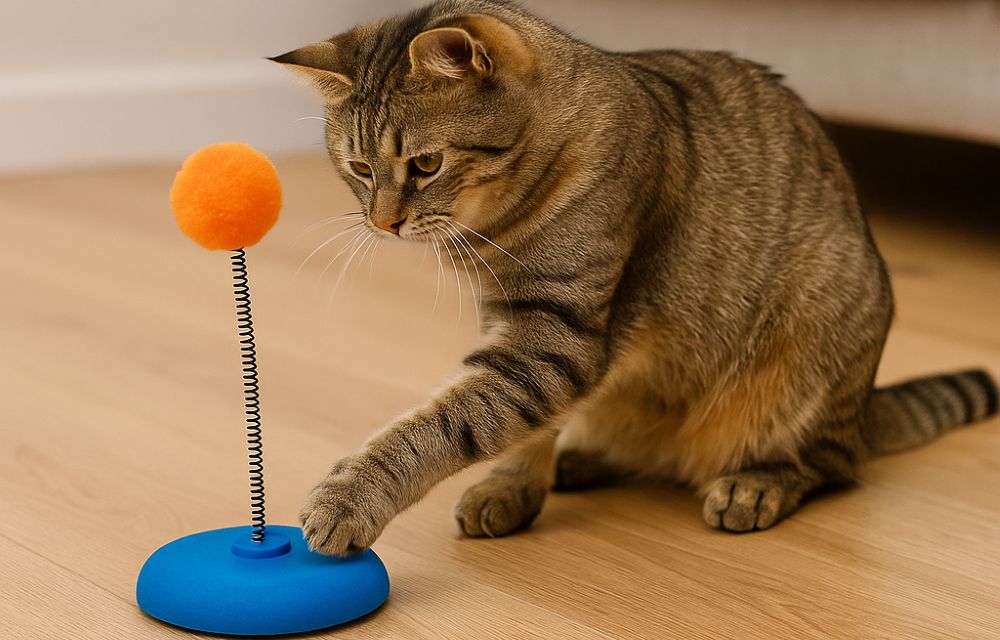
Cats are instinctive hunters. They stalk, pounce, chase, claw, bite, and wrestle with their “prey.” Without outlets for these behaviors, indoor cats may develop boredom, stress, overeating habits, aggression, or destructive tendencies. High-quality self play toys for cats provide an immediate solution by offering continuous stimulation without requiring human involvement. They transform solitude into opportunity—turning empty rooms into interactive playgrounds filled with motion, challenge, and discovery.
One of the defining features of self-play toys is movement simulation. Toys such as wobbling springs, rolling balls, fluttering feathers, rotating insects, and bounce-back stands mimic the unpredictable motion of prey. This encourages cats to engage in natural chase-and-pounce behavior, which strengthens muscles, sharpens reflexes, and boosts mood. Motion-based self play toys for cats also help burn excess energy, reducing nighttime zoomies and anxiety-driven behaviors.
Texture variety also plays a major role in engagement. Cats respond differently to felt, crinkle materials, plush, sisal, EVA foam, and natural fibers. Felt mice and wool balls offer soft resistance, while sisal toys satisfy scratching instincts. Lightweight plush toys can be carried around like “prey,” giving cats emotional comfort as well as stimulation. By combining multiple textures, the best self play toys for cats deliver multi-sensory enrichment that keeps playtime fresh and exciting.
Mental stimulation is equally important. Puzzle toys, treat-release balls, and interactive feeders challenge cats to think, strategize, and solve problems. These toys help prevent boredom and reduce stress while promoting cognitive growth. Smart puzzle-based self play toys for cats can occupy a cat’s attention for long periods, especially when filled with treats, making them ideal for owners who want to keep their cats engaged while away from home.
Durability is another key component. Because these toys are used without supervision, they must withstand vigorous play. Reinforced stitching, high-density foam, solid bases, and chew-safe materials ensure these toys remain functional and safe. Durable self play toys for cats prevent choking hazards and reduce the need for frequent replacement, offering better long-term value for pet owners and retailers.
Quiet design is also essential. Cats often become most active at night, and loud rattling toys may disturb sleeping owners. Silent felt balls, soft plush prey, and spring-based toys offer nighttime entertainment without noise. Quiet-function toys meet the needs of both the cat and the human household, making them highly desirable in modern living environments.
Self-play toys also address emotional well-being. Cats who engage with responsive toys—such as a spring that bounces back or a feather that wiggles when swatted—experience a sense of control and satisfaction. This improves confidence and reduces loneliness, especially for cats prone to anxiety or separation stress. Regular interaction with self play toys for cats can help maintain emotional balance even during long periods of solitude.
For multi-cat households, these toys provide shared enrichment without conflict. When each cat has access to multiple forms of stimulation, territorial stress decreases. Cats can rotate between toys based on preference—one may bat at a wobbling feather while another solves a treat puzzle. This variety promotes harmony and reduces behavioral tension.
From a business perspective, the market for self play toys for cats is booming. Consumers increasingly seek durable, safe, and engaging toys that offer long-term value. Products with interchangeable attachments, themed replacements, eco-friendly materials, and visually appealing designs perform exceptionally well on e-commerce platforms. Social media—especially videos of cats using self-play toys—further drives demand and boosts organic visibility for brands.
Sustainability is another emerging trend. Many brands now use natural fibers, recycled plastics, biodegradable felt, or eco-conscious dyes. Environmentally friendly self play toys for cats appeal strongly to younger pet owners who prioritize green living and responsible purchasing.
Ultimately, self-play toys are about empowerment. They allow cats to express who they naturally are—hunters, explorers, problem solvers, and playful companions. By investing in well-designed self play toys for cats, owners provide meaningful enrichment that supports physical health, mental clarity, emotional stability, and daily joy.
Tel: Phone / WhatsApp: +86 13718368168
Email: Email: info@fukapets.com

 KR
KR JP
JP EN
EN