
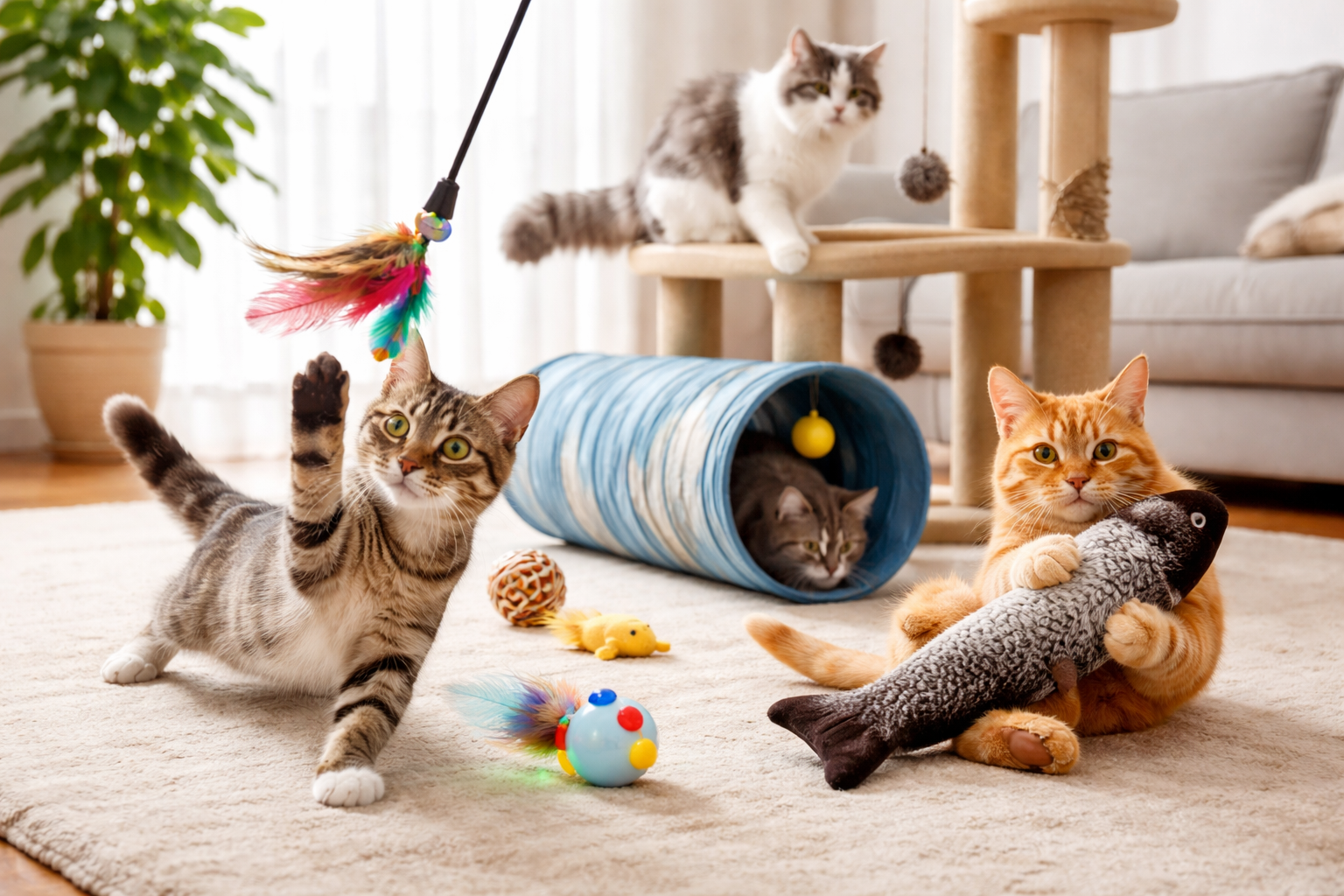
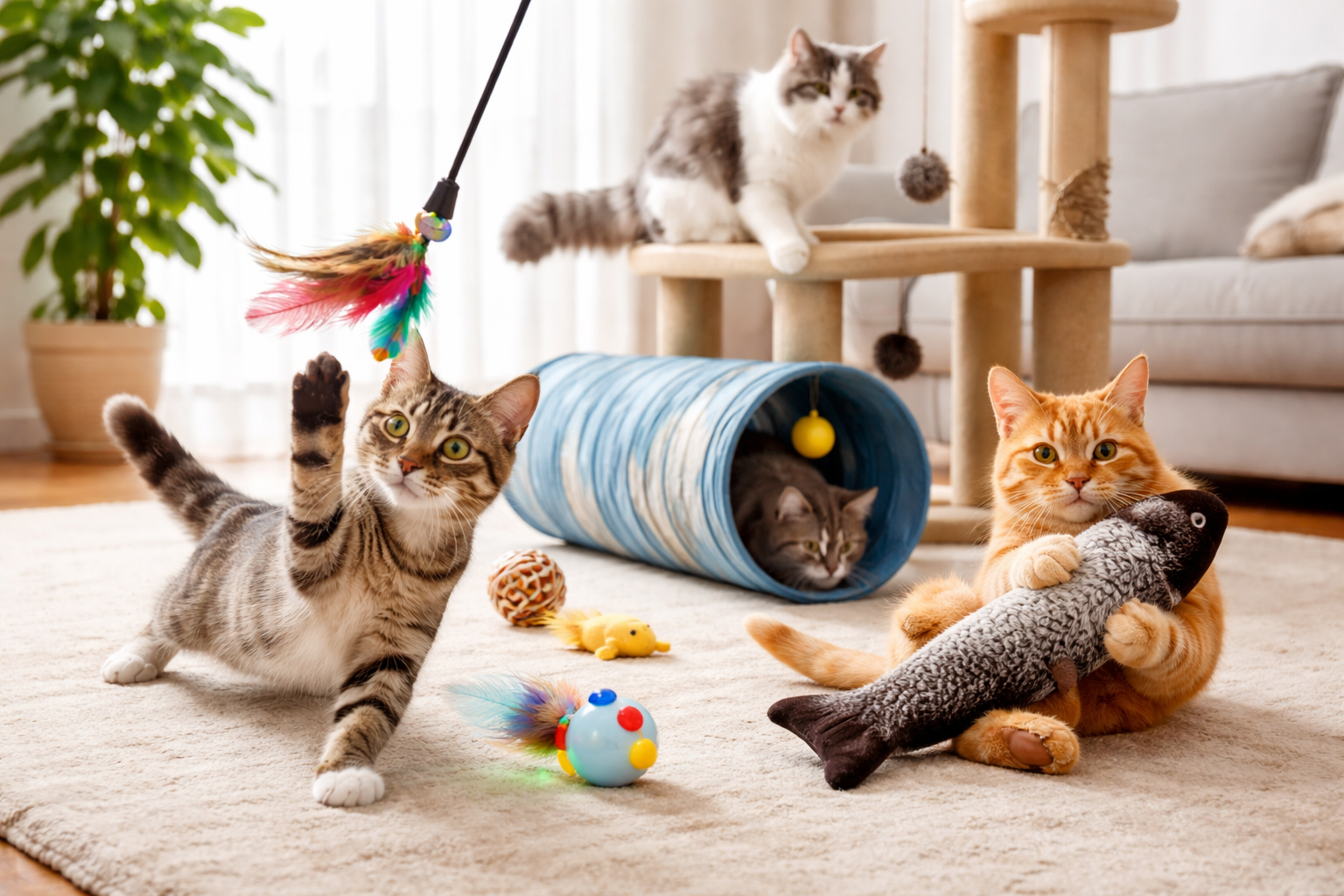
Cats that seem to race through the hallway, leap onto shelves, and pounce on anything that moves are often telling their owners one simple thing: they need better outlets for energy. Choosing the right play tools is not just about fun, but also about supporting exercise, confidence, and healthy daily routines. For families with energetic pets, finding the best toys for active cats can make a noticeable difference in behavior, mood, and overall wellness.
An active cat usually needs more than a single ball rolling across the floor. These pets are hunters by instinct, and their bodies are built for stalking, chasing, jumping, grabbing, and climbing. When that natural drive is not satisfied, boredom can show up in unexpected ways. Scratching furniture, waking people at night, knocking objects off tables, or showing frustration toward other pets are all common signs. Well-designed toys give cats a safe and rewarding way to use their energy indoors, especially in apartments or homes where outdoor access is limited.
One of the most reliable choices among the best toys for active cats is the wand toy. A wand encourages movement that feels close to real hunting because the toy can dart, pause, hide, and suddenly change direction. This creates a chase pattern that keeps cats mentally alert while also making them run, stretch, and jump. The key is variety. Feathers, plush insects, ribbon attachments, and crinkly tails can all create different levels of excitement. Rotating attachments every few days helps keep the game fresh and prevents a cat from losing interest too quickly.
 Another strong option is the motion ball. Unlike a simple plastic ball, modern motion toys may light up, wobble unpredictably, or move after contact. These features can trigger curiosity and active play, especially for cats that enjoy batting objects across the room. Small rolling toys are especially useful during solo playtime, but safety matters. The surface should be durable, the size should prevent swallowing, and the battery compartment must be secure. When chosen carefully, these toys can become part of a healthy activity routine.
Tunnel toys are often overlooked, yet they belong on nearly every list of the best toys for active cats. Tunnels support several instincts at once: hiding, ambushing, sprinting, and exploring. Some cats love to rush through them at high speed, while others prefer to crouch inside and wait for a moving teaser. A collapsible tunnel can also save space, making it practical for smaller homes. If the tunnel includes peek holes or attached hanging toys, it becomes even more engaging. For households with more than one cat, tunnels can encourage group play and playful chasing.
Climbing toys and cat trees are just as important as toys that move on the ground. Many active cats do not only want to run; they also want height. A strong cat tree with multiple levels gives them a chance to jump, observe, and rest between bursts of energy. Adding hanging toys or spring-mounted accessories turns vertical furniture into an active playground. The best toys for active cats often work together rather than alone, and a cat tree paired with teaser play or hidden treats can create a more complete enrichment system.
Puzzle feeders also deserve attention. Some owners think of them only as feeding tools, but they function as toys as well. An active cat often needs mental work in addition to physical exercise. Puzzle toys reward problem-solving and slow down fast eaters at the same time. Instead of placing food in a bowl and ending the experience in seconds, puzzle feeders turn eating into a task that requires pawing, nudging, and patience. This can be especially useful for indoor cats with high energy because it gives them a sense of purpose during the day.
Kicker toys are another excellent category. These are usually longer plush toys filled with soft material and sometimes catnip or silvervine. Cats grab them with their front paws and kick with their back legs, which mimics a natural wrestling behavior. For energetic cats that like rougher play, a sturdy kicker can be one of the best toys for active cats because it channels intensity away from hands, ankles, or household fabrics. Choosing a strong fabric and reinforced stitching helps the toy last longer.
Interactive electronic toys can also be effective when used in moderation. Some spin feathers under fabric, others pop out unexpectedly, and some glide across the floor. These can be valuable for cats that need stimulation while their owners are busy, but they should not replace human-led play entirely. A machine can create motion, yet it cannot fully imitate the unpredictability and bonding of play with a person. The ideal plan combines independent toys, climbing options, and direct interaction every day.
When selecting the best toys for active cats, rotation is often more important than quantity. A large pile of toys left out all the time may actually reduce excitement. Cats respond better when a few toys disappear and return later. This makes familiar items feel new again. Owners can create a simple rotation system with wand attachments, tunnels, puzzle toys, balls, and kickers. Even changing where toys are placed in the home can refresh interest and encourage movement.
Material choice also matters. Active cats can be intense players, so toys should be made from safe, pet-friendly materials without easily detached parts. Strings, feathers, bells, and elastic pieces should be inspected often. Supervised play is best for toys with long cords or small components, while sturdier solo-play items are better for unsupervised periods. Cleaning toys regularly is another good habit, especially plush toys that collect fur, saliva, and dust.
The most effective play routine usually follows a pattern similar to hunting: search, chase, capture, and reward. That is why many behavior experts suggest ending a play session with a small treat, meal, or quiet cuddle time. This helps active cats settle down after excitement instead of staying overstimulated. In other words, the best toys for active cats are not only objects but part of a larger routine that supports both movement and emotional balance.
Every cat has a different personality, so observation is essential. Some cats love fast aerial toys, while others prefer ground-level stalking games. Some are climbers, some are wrestlers, and some are puzzle solvers. Testing a few toy categories can reveal what truly motivates a pet. Once owners understand those preferences, they can build a more effective and enjoyable environment that keeps their cat busy, healthier, and happier indoors.
In the end, the goal is not simply to buy more products, but to choose smarter ones. The best toys for active cats are the toys that invite repeated movement, encourage natural instincts, and fit safely into a cat’s daily life. When play becomes part of a consistent routine, energetic cats are more likely to stay engaged, relaxed, and satisfied.
Tel: Phone / WhatsApp: +86 13718368168
Email: Email: info@fukapets.com

 KR
KR JP
JP EN
EN