
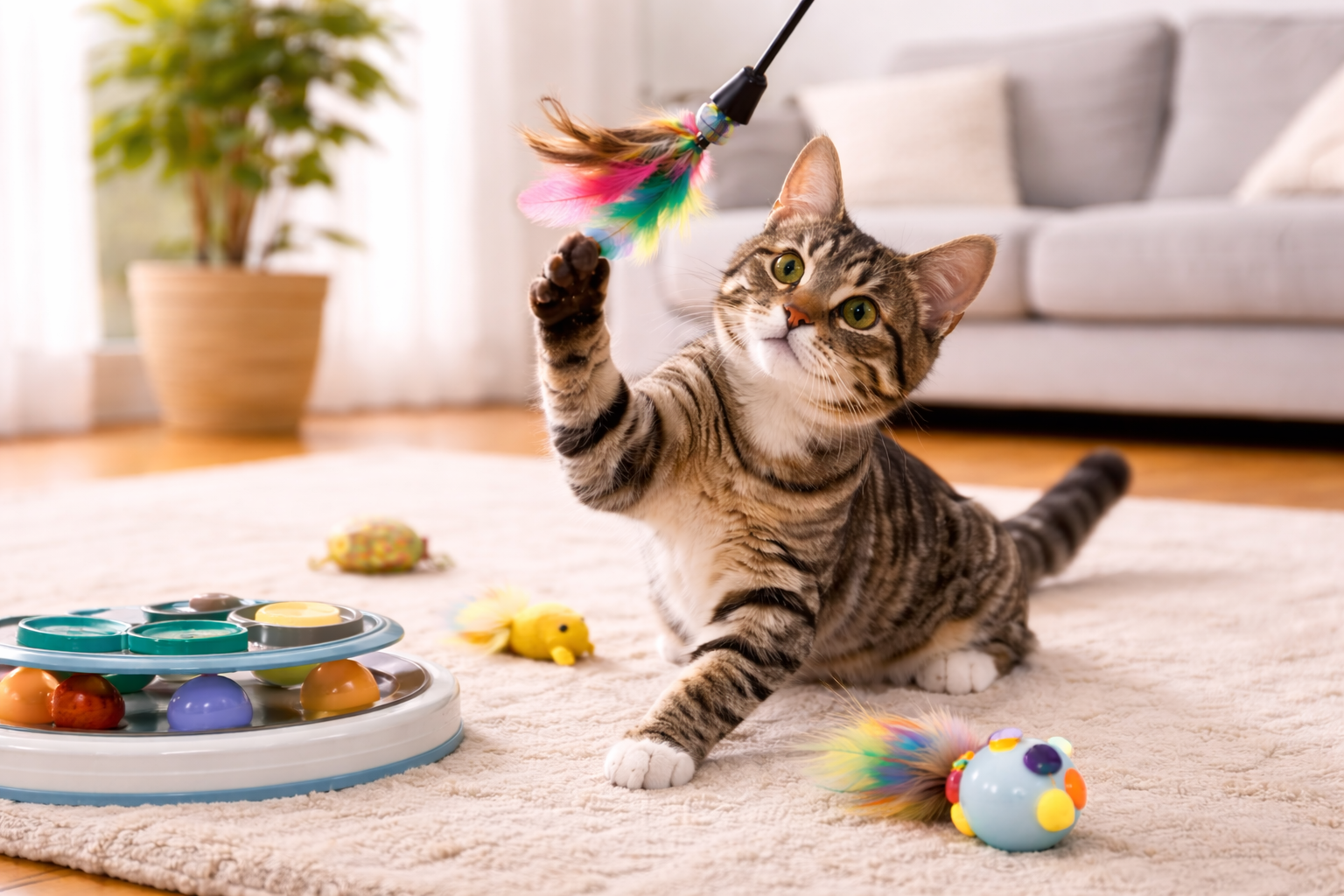
Life indoors can be safe, comfortable, and calm for cats, but it can also become repetitive if their environment never changes. A cat may have soft places to sleep, regular meals, and loving attention, yet still feel under-stimulated without the right forms of play. For pet owners hoping to create a richer daily routine, stimulating cat toys for indoor cats are one of the most practical ways to support physical activity, mental focus, and emotional balance.
Unlike outdoor cats, indoor cats do not spend their day climbing fences, tracking scents, hiding in grass, or watching small moving creatures. Their world is more limited, which means their toys and surroundings need to do more work. The right kind of play item can encourage stalking, chasing, pouncing, batting, climbing, and problem-solving. These behaviors are not random habits. They are built into a cat’s instincts. When owners understand that, it becomes much easier to choose toys that truly enrich a cat’s day instead of simply filling a basket.
Many people assume cats are low-maintenance pets that entertain themselves. Some do, but many need more structure than owners expect. A bored indoor cat may sleep too much during the day and become restless at night. Some overgroom, scratch furniture, demand attention constantly, or lose interest in the home around them. That is why stimulating cat toys for indoor cats are important. They do more than create movement. They help prevent boredom and give cats healthy ways to express their natural behaviors in a safe indoor setting.
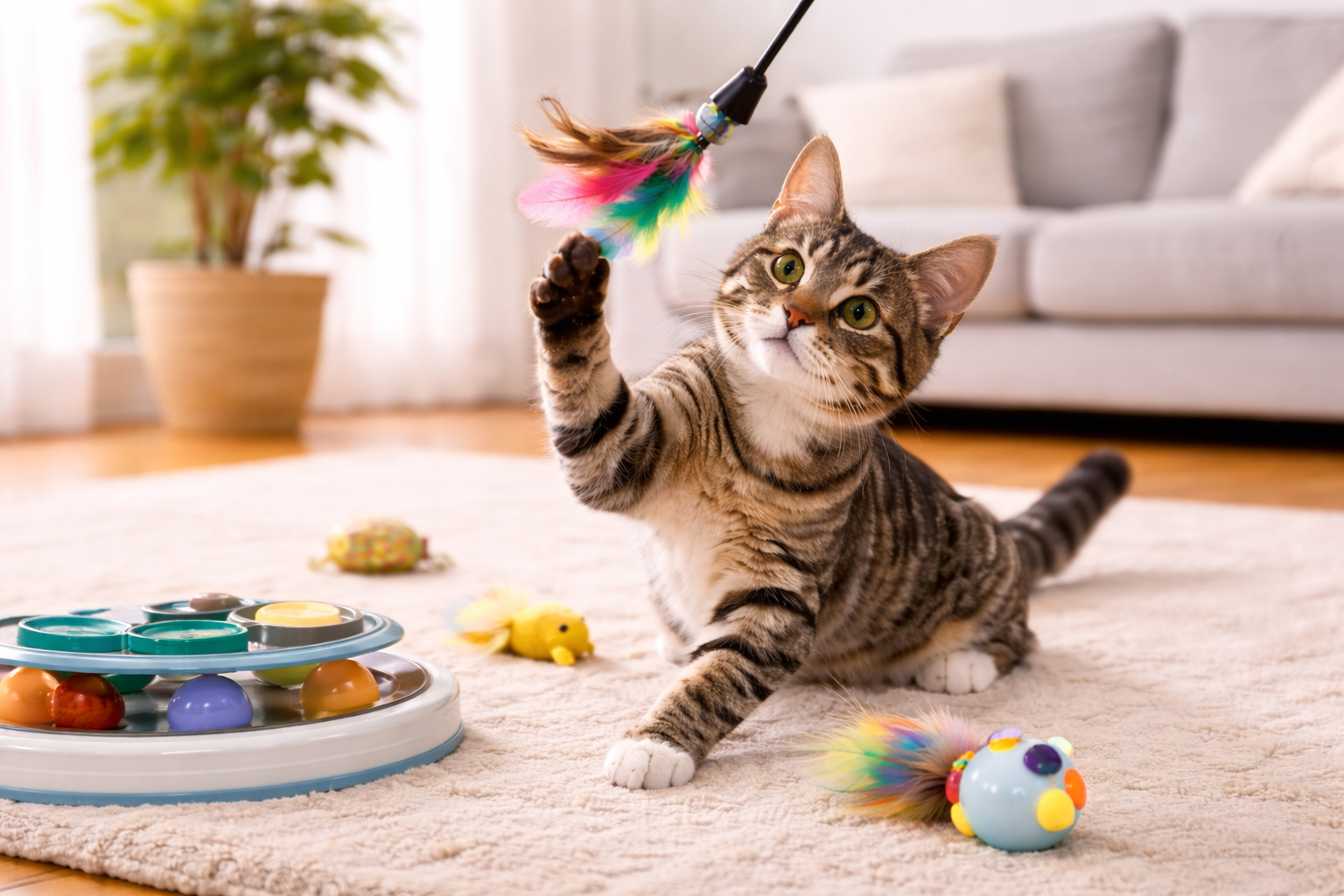 One of the most effective choices is the interactive wand toy. These toys allow owners to move feathers, ribbons, fabric strips, or plush lures in ways that imitate prey. A toy that darts behind furniture, pauses under a chair, or suddenly changes speed will usually attract a cat’s attention much more than a toy that stays still. Wand toys are especially helpful because they turn play into a shared activity. This builds trust and strengthens the bond between cat and owner while also providing excellent exercise. Among all stimulating cat toys for indoor cats, wand toys remain one of the most versatile and rewarding.
Puzzle toys are another strong option, especially for intelligent cats that need mental challenges. These toys often hide treats or dry food inside compartments, tracks, or small openings. The cat has to paw, nudge, or spin parts of the toy to get the reward. This process adds purpose to the activity and turns snack time into a mini hunting session. Puzzle feeders are particularly useful for indoor cats because they slow down eating and reduce mindless boredom. Rather than finishing a meal in seconds, the cat stays engaged and focused for a longer period.
Ball track toys are also popular in indoor environments. These usually include one or more balls that roll through a circular or layered track when batted by a paw. The movement keeps restarting, which can hold a cat’s attention longer than a loose ball that rolls under a sofa and disappears. For cats that enjoy batting and quick paw action, this type of toy can be an excellent addition. It is often one of the easiest stimulating cat toys for indoor cats for solo play, especially when the owner is not available for a long game session.
Cat tunnels should not be ignored either. A tunnel may look simple, but for a cat it can become a hiding place, sprint lane, ambush point, and resting space all at once. Many cats love running through tunnels at full speed, peeking through side holes, or waiting inside for a teaser toy to appear. Tunnels can be folded away when not in use, which makes them convenient for smaller homes. Combined with a wand toy or small rolling toy, they can instantly make indoor play feel more dynamic and realistic.
Climbing structures also matter when discussing stimulating cat toys for indoor cats. Play is not only horizontal. Many cats want to move vertically, jump to higher places, and observe the room from above. Cat trees, wall shelves, or sturdy climbing towers help satisfy this need. A climbing structure becomes even more engaging when it includes hanging pom-poms, scratching posts, platforms, or hidden spaces. It is not unusual for an active indoor cat to use the same structure for exercise, rest, scratching, and play throughout the day.
Kicker toys provide a different type of stimulation. These longer plush toys are designed for grabbing with the front paws while kicking with the back legs. This kind of wrestling behavior is natural and can be highly satisfying for energetic cats. Some kicker toys are filled with catnip or silvervine to increase interest, but even without those additions they can still be useful. Cats that enjoy rougher play often return to kicker toys repeatedly, making them a dependable part of an indoor toy collection.
Motion-activated toys can also help break up quiet hours. Some flutter, wobble, spin, or move unpredictably after being touched. These are especially helpful for curious cats that like surprise movement. However, electronic toys work best when mixed with traditional play. A fully automatic toy may create excitement, but it cannot replace the social interaction and variety that come from owner-led sessions. The best results usually come from combining several categories instead of depending on one toy alone.
Rotation is another major factor that owners often overlook. Even the best toy can lose its appeal if it is always available in the same place. Rotating items every few days helps maintain novelty. A feather wand hidden for a week often becomes exciting again when reintroduced. The same is true for tunnels, puzzle feeders, and small plush toys. With stimulating cat toys for indoor cats, success often depends as much on presentation as on the toy itself.
Safety should always come first. Toys with loose strings, small detachable parts, or weak stitching should be checked regularly. Damaged toys need to be repaired or removed before they become risky. Materials should be non-toxic and durable enough for repeated biting, clawing, and kicking. Supervised play is best for toys with cords or small accessories, while sturdier items are better choices for independent playtime.
The most satisfying indoor play routine usually follows a natural pattern: chase, catch, and relax. A short but focused play session two or three times a day can be more effective than leaving out random toys without interaction. After active play, many cats feel calmer and more content. This is one reason why stimulating cat toys for indoor cats are so valuable. They do not just fill time. They help create a healthier rhythm for the entire day.
In the end, every cat has personal preferences. Some love feathers, some love tunnels, and some care most about solving food puzzles. Owners who observe carefully can learn which styles of movement, texture, and challenge their cat enjoys most. Once those preferences become clear, choosing the right toys becomes much easier, and indoor life becomes more engaging, balanced, and enjoyable for the cat.
Tel: Phone / WhatsApp: +86 13718368168
Email: Email: info@fukapets.com

 KR
KR JP
JP EN
EN